Friday, October 25, 2019

New Prospects

So I'm reviving this Blog from the dead because after being stagnant for the last few years, I'm moving to the next level. Guitar builds.

Since the last post, I've been collecting pedals, and modding guitars and basses like always, and upon modding my last guitar (2018 Fender Player Series in Surf Pearl), I started thinking of a guitar that doesn't quite exist. Then I decided to do a bass build including finish. Well, I practiced some finishing techniques, but living in Wisconsin, it's just getting too cold for spray finishes.

So I went back to the guitar design I had in mind, and decided to do a version where I can do the finish by hand through the cold months. I'll be posting pics throughout the process on Instagram. As of writing this, I've been experimenting with finishes, and I have another guitar on the way that will be a Guinea pig for some mod tests I want to try.

The mod project will be an Ibanez RGRT421. This is definitely out of the wheelhouse of my guitar taste, but I've been intrigued with the more modern Super-Strat type of guitars, and this is a neck-thru design with a type of mahogany body, it's a hardtail, has a slimmer 3-piece maple neck, has 2 humbuckers, and a reverse headstock. I'll post more about it as I work on it, but Sweetwater is taking their time getting it in stock and shipping it to me. I did get a cool strap for it from Musician's Friend though.

Also, I've been experimenting with some BOSS pedals to see what I've been missing over the last 30 years. Some of the more rare BOSS pedals have been cloned by TC Electronic and Behringer, and I've been trying some of those as well. The TC Electronic 3rd Dimension is a spectacular chorus that I've been really digging and it's a clone of BOSS' DC-3 chorus from the early 80's. Another pedal that's been a boatload of fun has been the Fender Pugilist Distortion. Definitely worth a try.

Friday, March 6, 2015

Practice What We Preach; Acheived Mods

Lately, I've gotten more into Les Pauls as you may have been able to tell with the past few articles. Of course, it's never in our nature to let a guitar sit too long without a few mods. As such, I felt it only fair to share the ongoings and give som opinions.

I've written about my Epiphone Les Paul Plus Top Pro, and this has been my number 1 go to guitar. So far, I've swapped the stock Grover Rotomatics with the Grover locking equivalent. This was a direct fit, and makes string change much more easier. I also put Dunlop Dual Design Straplocks on it. I kept the Probucker 2 and 3 on, but have been toying with the idea of throwing in a set of Seymour Duncan APH-2s Slash Signature pickups. I really like the Probuckers, so I'm actually leaning more towards getting a gold-top to put APH-2s into. The Epiphone Les Pauls have a great 60's slim taper neck, and are very comfortable; definitely more so than the 2015 Gibson lineup. I also have a set of Graphtech saddles that are going to be put on at the next string change. Bridge and tailpiece are gonna stay because they are locking. The electronics have a clip system for the Probuckers, so they'll be staying as long as the pickups will.

The other Les Paul I have is a Madore; which from our research turns out to be a Les Paul Custom clone made in Korea where some really good Epiphones were made. This is more Gibson-like in that it seems to have a maple cap, and the fretboard is actual Ebony (one could argue this is better in that Gibson has been putting Richlite® on their customs, and possibly doing weight relief).

This guitar is a work in progress, and that's what I bought it for. The pickups (stock Korean Epi type; very muddy and not much life) have been replaced with a Seymour Duncan Hot-Rodded set; which is an SH-2n Jazz in the neck, and an SH-4 JB in the bridge. All around great pickups, and I'll put them through their paces tonight at practice. Also, the wiring was replaced with a 50's style harness by Sigler Music. This Harness has CTS 500k pots, and Sprague Orange Drop .022 µF tone Capacitors. I also installed a new set of Grover locking tuners and Dulop dual design Straplocks (both in gold of course), and swapped the stock Speed Knobs for something slightly more better.

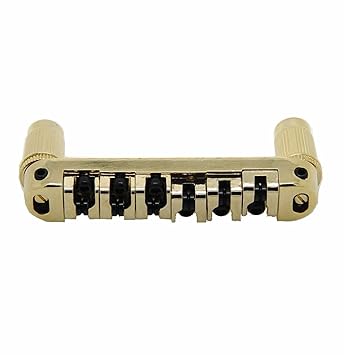
The next phase will be adding a roller bridge; a knock-off of the Wilkinson Roller locking bridge that I found.
The original bridge was cut badly, and I wanted to try something that locks like a Tone Pros, and this seemed perfect. I also have a Tone Pros locking tailpiece on the way as well. I'm on the fence about the nut, but I'm looking to Graphtech's Tusq for this in the future.

The other guitar I've been using is the aforementioned Tele (Fender Standard with Duncan SH-2n Jazz in the neck and Hot Rails for Tele in the bridge). I'v since added Graphtech saddles to this guitar, Fender's locking tuners (these replace most modern American and Mexican Fender Strats and Teles), and switched the locking tuners from Schalloer to Dunlop. This guitar has become a beast, and It's getting hard to decide which guitar to play between the 3.

So those are the mods I've done, and what mods are to come. I'll give more incite on the function soon here, but it's been a blast taking some great guitars and making them stellar. The more I tinker with these "lesser" guitars, the less I would want to (over)pay for a Gibson or American Fender. For 1/3 to 1/2 the price, you can get pretty much the guitar you want, instead of the guitars the big guys say you should be playing. I look at Gibson R8's and R9's and shake my head. ~$5,000 for a guitar with tuners I hate, pickups that never impressed me, and a lot of hype. The Epiphone Les Paul neck and i are becoming real good friends.


David and Goliath: Big Box vs The Little Guy

One thing we've been seeing a lot of is our peers going to the big box music shops over going to the corner guitar shops. When asked why, many players give different reasons, and seem to cut short the advantages of going to the small shops.

One former bandmate would only go to Guitar Barn, and refused to go anywhere else when I first met him... of course this was until I talked him into going to  a local shop where he found his now #1 guitar; a Fender Esquire GT Custom that had been a short run Fender did around the same time they were doing the Blink 182 guitars. I'd mention a shop and he'd say "They suck! They're always mean to me!"

With smaller shops that have been open any length of time, the better ones are run by techs, and not salesmen. One of the local shops I go to has 2 individuals working there who are anything but personable. They aren't mean, they're just tech-y. They are great at doing setups, doing mods, and some of my go-to guys for anything technically related to guitar. They're also a great source for parts; often carrying parts unavailable at our poorly stocked Guitar Barn (3 feet of glass case with a half dozen pickups?). This same corner shop; Rock Haus in Milwaukee, WI, also has a spectacular array of boutique pedals. Their guitar selection is limited to what comes in used, but occasionally they have some great finds. Wade's Guitar Shop on Milwaukee's East Side is the only place Aaron trusts to do adjustments on his SG Supreme, and they usually have at least 4 or 5 guitars to drool over, and are a RIC dealer.

We have one local shop that has become a go-to for vintage and boutique gear called Cream City Music in Wauwatosa, WI. They're showroom is larger than most corner shops and it is in the suburbs, but it was started in a smaller location which is now a photography studio, and was recently bought out by its employees. The store has been a big player in selling Gibson which is saying a lot in this market where Gibson sends whatever guitars they want to their dealers, and said dealers have little say as to what they're going to stock. Their selection on Gibson is actually more impressive than the Guitar Barn down the road, in that they have some Gibson guitars (like the Dave Grohl  signature) that aren't "safe" stocking items, and would never be hanging on the walls at Brookfield, WI Guitar Center. It's been our theory that guitars at Guitar Barn are shipped around, and what are received in our area are the items with an easy sale rate, and nothing outside of the status quo, or just the left over crap. The other thing to keep in mind is that the big box stores are getting away from haggling, and running with standardize pricing. At the aforementioned local shops, I get a discount price from sticker without asking. Guitar Barn lowers their prices only when I show them an ad from a competitor. Cream City Music also has a room with just Gretsch guitars high end (vintage and boutique) amps. They carry amps like Matchless, Carr, Dr Z, Victoria, and a few other boutique amps, as well as Marshall, Vox, Mesa, and Fender.

What About Service? Isn't the Customer Always Right?
Some of the smaller guitar shops seem to ignore customers. This is due to the fact that a lot of the guys working at them are also working on guitars, dealing with customers, or are oblivious to people in general because they've been hearing local kids banging out the butchered versions of their favorite songs all day. This is particularly true in the summer months. One local store (though now an online retailer) is Cascio Interstate Music. In the summer, the guitar department manager and I would call it "Camp Cascio", due to the fact that during summer months, it seemed like parents would drop their kids off as free daycare.

As stated, the smaller shops are run more so by techs. Big box stores have salesmen... more than likely trying to get commission. Our local Guitar Barn has  maybe 2 guys who know a bit about gear. The rest of their saleguys (and one of their "MASTER LUTHIERS") are younger kids who are great if you need a buddy to confirm you're gettin' a bitchin' axe for your wannabe Kings of Leon band, but they are useless when you've been around and just want to know what tone wood the damn guitar is made of. They seemingly only know as much about the product as what is printed on the tag. They will however kiss your ass. A lot. It's kinda like being in a strip bar actually... minus the nakedness. I had one kid there argue with me that Gretsch was owned by Fender. Gretsch is DISTIBUTED BY and their R&D is done by Fender, but the company is owner by Fred Gretsch of the original Gretsch family.

A lot of times they go with common myth, and misinformation to get the sale, or to produce an up-sell. I notice this when purchasing lower end Gibson or Epiphone. I've had salesguys tell me the Les Paul Studios are maple veneer rather than a full maple cap, which was a theory had heard before, but a false one.

The key with the sales model for the big box stores is ego-stroking. They know how to stroke the fragile egos most musicians have. Also they offer bullshit "coverage", and "professional setups" on guitars they sell which in we've experienced guitars that have needed neck adjustments after getting said "professional setups". Those of us who know a thing or two about guitars can either do our own setups, or have techs we trust; not some guy off the street who's done a couple neck adjustments that was given a nametag that says "MASTER LUTHIER".

So You're Just Against Big Box Stores?

No. In fact for every great corner shop, we find a multitude of terrible ones. There's a reason I don't refer to the small shops as "Ma and Pa" music stores. We have experienced shops where we've been turned off by opinionated attitudes of the people who run them. There's also a know-it-all factor of shop owners living off of antiquated ideas... even more so than ours. Let us not forget the scam factor. Generally, you can tell fairly quickly what kind of shop you're dealing with. If the people running it seem to know what they're talking about, are doing work on guitars, and have their store stocked with guitars that are reasonably priced, and are brands you've heard of, you're in the right place. If there's a lot of off brands, and the people there don't know what they're talking about, Guitar Barn might actually be a better bet.

We have seen some stores where the owners hearts were in the right place, but they just don;t know how to order. One shop in my old home town would wtock only one gauge of every brand of string, ie they had a set of D'Addario in 10's only, a set of Ernie Ball in 9's only... I recommended they stock Ernie Ball 10's and not charge full retail if they wanted people to buy local. In situations where the local guitar shop is the only game in town, I definitely recommend either ordering online, or better yet, find shops in the closest large town through networking with fellow musicians. In my old home town, we would network with musicians that were 1 1/2 hour away for music gear, as well as setting up shows. It pays to be social.

Thursday, January 8, 2015

Putting Together a Rig on the Cheap

So I recently started playing guitar for another band, and have been slowly putting together a rig. I have my primary gear for my bass playing, and rather than dissecting that, I would rather have a separate set of gear to make life more easier. In other words, I've been researching a bunch of budget guitar gear, and felt I'd post about it.

On the guitar front, I had picked up that Epiphone Les Paul PlusTop Pro, and that is my primary go-to guitar. What I've been looking into is a backup to that guitar. I've been looking at the used Epiphone market, and been highly disappointed. I found a beautiful ebony Les Paul Custom (made in China) at one of my favorite corner shops, but they wanted $50 less than a new Epiphone Les Paul Custom Pro which has ProBucker pickups and locking hardware. So I decided to go the GFS route and get an Xaviere XV500 (with case and GFS locking tuners). 

The other temptation was getting a counterfeit Gibson from overseas, and modding the hell out of it. I won't go into detail on the source as there is great question on the legality and ethics of these. The price on these is about half of a new Epiphone, and they're made to look like an actual Gibson (some even have the logo, serial numbers, and "MADE IN USA" stamp on them).

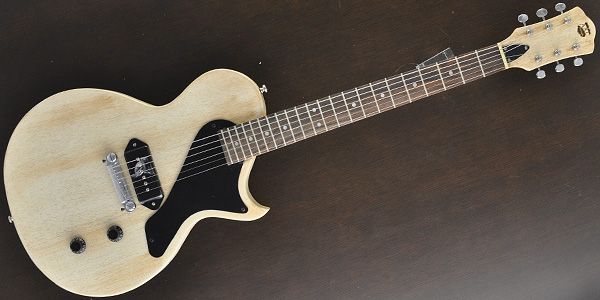
Another candidate was the AXL Badwater 1216 Jr.

This might be an upcoming purchase, as these are some great Les Paul Jr cloneS. They also have one called the Badwater which has upgraded hardware and a Lindy Fralin dogear P-90, but costs north of $500.

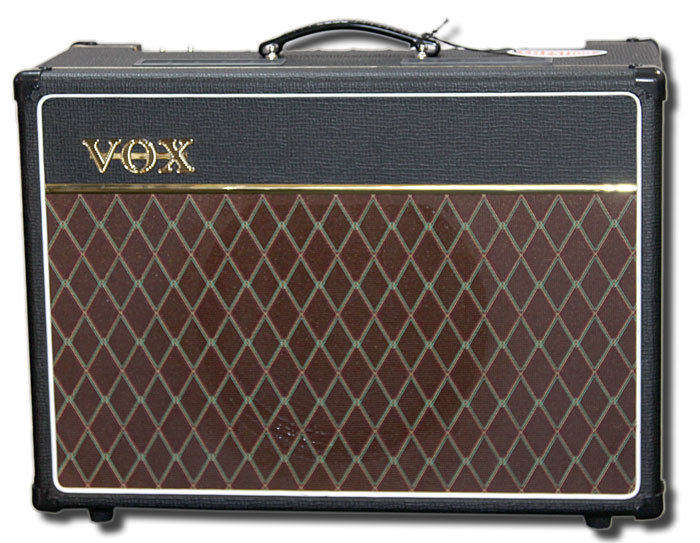
For an amp, I'm going with a used Vox AC15C1. 

These things can be obtained for under the $500 mark used, and do exactly what I want them to do. I generally stick with an overdrive sound and run it all day. This isn't a great amp for clean, but is a spectacular amp for bright, clear crunch. Very British sounding, and it looks phenomenal. It's also sized more like a 2x10 combo than a 1x12. Great all-tube attack. I was looking to Bugera, but they are getting harder and harder to find, and the Vox was in my price range. The other reason for getting this amp is the rest of the band uses combos (the bass player has a Behringer that I sold him), and I don't want to overpower the rest of the band with my usual guitar amp; Sovtek Mig 60 with a custom built 6x10 cab.

For pedals, I'm going with Joyo. These are Chinese made clones of some really great pedals, and come in at under $30. I'm going with the JF-02 Ultimate Overdrive which is in the realm of a Fulltone OCD pedal. 

I'm also going to try their JT-305 Guitar Bass Chromatic Pedal for tuning. I had thought about trying out the Snark tuner pedal, but this is a little cheaper. The GFS pedals at www.guitarfetish.com were another candidate, but there again, they were about $10 more, and shipping was twice as much as Amazon. 

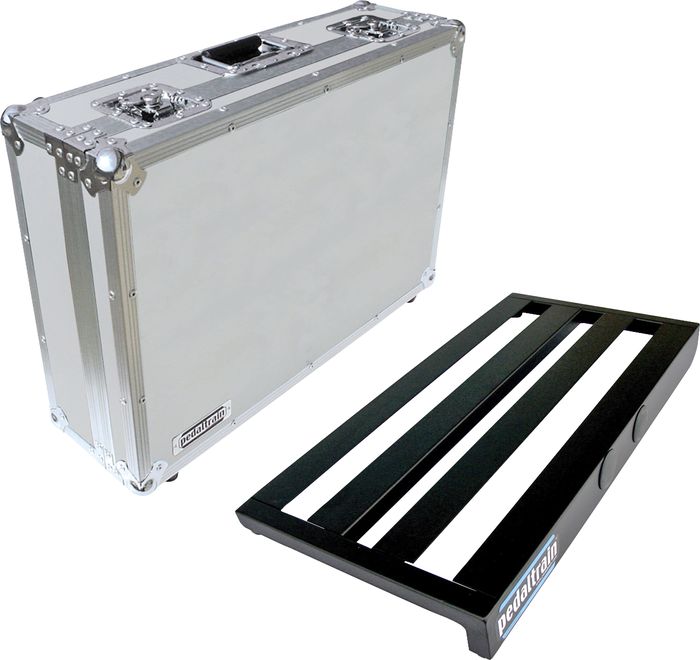
The pedal board will contain those 2 pedals, a TS-808 (Ibanez Tubescreamer) clone which will be purchased later, my X2 XDS95 wireless receiver, and a OneSpot power supply. I've looked at quite a few pedalboards in my search. The one I use for my bass rig is by Road Runner, and has been holding up quite well over the 6 years I've had it. PedalTrain seems to be the more popular pedalboards among us blue-color musicians, but they all work on a concept that involves pulling the board out of the case.

 A pedalboard should just have a lift-off top. What I found through Rhondo Music is the CNB pedalboards.

These work the right way, and can be purchases from around $30 to about $100, depending on how fancy you need to get.

Another mention should be the PedalTrain Volto.

This is a battery-pack that is meant to power you're pedals for up to 36 hours. Like everything else these days, the power supply for charging it looks to be a mini-USB cable. The Volto comes in great in that it is one less thing to plug in when setting up a pedalboard, and you don't have to search the front of the stage for a place to plug in your pedals. The cables included will power 6 pedals. I wouldn't mind picking one of these up, they go for about $100.

Monday, December 29, 2014

Lower Watt Amps

There seems to be a growing (if not grown) trend towards lower powered amps, combos, and what not. There's more and more talk of higher wattage amps; 50+ watts, being unnecessary for live applications, and there are more and more ways to achieve low-watt sound in today's market. We use amps ranging from 15 watts to 150, and feel that every amp has its sound and application.

Lunchbox Amps: Lunchbox amps seemed to get their start with the Orange Tiny Terror; a great 15 watt amp that I used for quite a few years. Seemingly every amp manufacturer has a piece of this pie these days. Mini versions of Marshall and Mesa Rectifiers are quite common, and these amps can push a full 4x12 cab. That said, one must consider what they are trying to achieve with these. The majority of these use EL84 power tubes, which in our experience get you some great British high-gain sound. The Tiny Terror did this in spades, as do some of the Marshall offerings.

Orange has increased their line to include a Dark Terror which is voiced to be a bit darker than the original. They also include a Dual Terror, which is a 30 watt version of the Tiny Terror with 2 channels. The downside to the Dual Terror is it's 2 channels are the same, and each channel is kind of a one-trick pony.

The one we weren't too keen on was the Mesa Mini Rectifier. A key to Rectifier sound is the 6L6 tubes and the bassy sound. The Mini Rectifier doesn't quite nail that sound. The other aspect of the Mesa mini heads is there's way too many switches on these, and the simplicity is lost.

Jet City also has a lunchbox amp that gives some great high-gain sound, and is definitely worth a try. There's been some mixed reviews on the Egnater stuff, but we've been rather impressed with their sound as well.

Combos: There have seemingly been combo versions of stacks since stackable amps have been coming out. That said, we've never found a combo version of a Marshall that quite captures the sound of its big brother. One band I was in had a guitarist with a JCM 900 combo that just sounded shrill. The sound of a head on a 4x12 cab doesn't translate in a combo with an open back. At the same time, a halfstack isn't gonna sound like a Twin Reverb. Some look to combos as a less expensive way to get their sound. Combos are compact, but good ones aren't necessarily cheaper. Generally, we look at combos as a good foundation to build on with pedals, and this seems to be a popular way for guitarists to get their sound. Also, combos aren't always low-power or light-weight.

For a good clean sound, something like a Fender Twin Reverb is always a trusty go-to, as well as the Deluxe. The Bassman is a great pallet for sound as well. These do clean well, but are not low-power so much. Our feeling on clean sound is it's better to have power on tap. More power leads to clean sound without break-up at low volumes. Some of the modern Fender offerings seem to work as well, such as the Hot Rod and Blues amps. The Hot Rod does clean and reverb well enough, but the overdrive on these are harsh, and we prefer the overdive sound on the Blues, particularly the Blues DeVille.

Now for those looking for highgain sound from a combo, the Vox AC15's and AC30's are a great sound for a price that is not ridiculous. There's some stigma about these being made overseas, but if you're a hand-wired zealot, there are hand-wired options... at a higher cost. These get a bright British crunch, the crunch that made the Vox combos famous, and do so at 15 or 30 watts. These are amps that have noobs say "That's loud for a 15/30 watter!!". That said, they are designed for crunch, not clean. To those that whine about the clean on a Vox, I say again, they're designed for crunch, not clean.

For those who have the funding, there are seemingly countless boutique and private builders with some great offerings as well. Matchless is a name we've been familiar with for decades. As kids, we could never understand why anyone would pay $2000+ for an amp that only has less than 15 watts. Since then, we obviously grew taste, learned about clarity, and learned appreciation for construction. The sound and construction on these are superb, as are many of the other small builders. A dream amp of mine is actually a Matchless Club 30 head with matched 2x12 cab, a great throwback to the old piggy-back amps. Bad Cat is another amp that thrills us as well (started by a Matchless designer). There are also several others, but these are the ones we have played, and fell in love with.

Another thing worth mentioning on this subject is the EH 44 Magnum. This is a 44 watt solid state "head" in the shape of a pedal. We have heard the 22 Caliber worked quite well, and had a great sound. We; being tube zealots, looked at these as a nice backup for when your head went to hell.

To Sum It Up: The trend has fallen from the halfstack considerably. Insiders have told us halfstack sales are extremely low, and at the local Guitar Barn, there are no high-end 4x12 cabs on the floor, even though there are pro-line heads. The search for tone has definitely drifted into the low-watt arena, and smaller seems to be the way people are moving.

Wednesday, December 24, 2014

Just Gonna Vent Here...

So I had been making some conversation on one of the Les Paul forums. On one thread, this asshat made a stupid remark comparing top-priced gear with budget gear where he said something about touring Canada with Gibson Les Pauls, and how he wouldn't trust a Squier in that climate. I called him out on this saying that here in Wisconsin, I've never had an issue with the cold using a Squier, but I have known people to have Gibson necks snap from the cold. I've known a few guys that opened a guitar case, pulled the guitar out, and noticed the guitar wouldn't go in tune because the neck had cracked. In one case, the player felt the sharpness of the crack first.

The thread can be read here: http://www.mylespaul.com/forums/vendor-classifieds/322246-ok-im-just-gonna-say-outright-11.html#post6678295 , I'm DaveThePius on that forum.

He proceeded to rip on me asking about the "magical" maple Squier uses for their necks, vs the maple Gibson uses. This struck me odd, as EVERY Gibson Les Paul we've come across has had a mahogany neck (exception for the Zack Wylde models); kind of a key to the Les Paul sound. He then proceeds to show a bunch of pics of some Les Pauls (supposedly his) with maple necks (according to him). Some looked like they could have been maple, but one he showed a close-up of looked like mahogany to me. He proceeded to tell me I needed to do more research... me... the guy who eats, breathes, and shits guitar gear knowledge. He also claims that the guitar was frozen "solid", which makes me wonder why he was touring around in an ice cream truck.

Squiers, like Fenders have one piece maple necks. Gibson necks are predominantly mahogany, and are glued; hence why I'll do neck adjustments on all my Fenders, but won't touch a truss rod on a Gibson. The techs I've worked with seem to fall in the line of thinking that it's pretty hard to mess up a Fender neck (Squier necks are built the same way as Fender, just overseas), and I've never come across one that snapped . Gibson and Ibanez, yes, but not Fender or Squier.

I generally don't blow my own horn, and never claimed to be a great player, but I rarely come across players with as much gearhead passion as myself. If anything, I come across people who are better at specializing than I am. I know who to go to for everything Fender related when it comes to amps or guitars, I have my Vintage guys I use for reference, I've got my Gretsch guy, and I have the big-box stores to tell me the bullshit the manufacturers are saying. I spend much of my free time reading about gear, new and old on forums, manufacturer's websites, and reviews. I watch countless videos on YouTube, and I actually leave my house to go to shops to try guitars, amps, pedals... and am not just a slave to one brand. I also don't fall into bigoted beliefs when it comes down to where gear is manufactured. I'm more impressed with the Epiphones I've come across than the Gibsons that have come out in the last 10 years.

I don't pigeonhole myself into one type of gear, or way of thinking, as I never aimed to be a one-trick-pony musician. I may not be able to tell you the difference from a '69 Les Paul and a '71, but then again, Gibson isn't a consistent company. Things can be slightly different on 2 guitars of the same model during the same year. Example: Aaron's SG Supreme has a Sapphire blue finish in a burst that goes from blue at the center to black at the edges.


We've come across ones from the same year that go from the blue to a more purple. Later, they changed the pattern from looking like a normal burst (dark around the edges of the guitar to lighter at the pickups; like a current Les Paul burst, or a Fender sunburst) to a weird looking burst where if you hold the guitar upright, the bottom (between the bridge and strap button) is dark, and it gets lighter up at the horns.


This all said, if you feel I'm saying something wrong on here, please comment or message me. I'm all about giving accurate info, and will correct any misinformation. Most of what we offer on here is opinion based on experience, as that was the original intent of Guitar-DNA. We are by no means certified experts, just players. We don't just do this for fun, but more as a public service. We receive no compensation for anything we review.

Wednesday, December 17, 2014

CrAzY MoDs??

In the world of guitar and bass, we've seen, thought about, and woke up screaming to the thought of some crazy modifications to guitars and basses. This is where the tech minded get abstract. Without getting too balls-deep into modding out tone caps and pot values, we'll take a look at some of the more awkward mods we've seen, practiced, theorized, or read about.

Gibson With Filter'Trons: We have had experience with Les Pauls and SGs, and we've had experience with Filter'Trons. In general, Filter'Trons are renown for giving Gretsch guitars that shimmer; not as barky as a Strat, or as bright as a Ric, but a sound all it's own. People have asked the question "If I put Filter'Trons in my Gibson, can I get a Gretsch sound?" No. What one must keep in mind with Gretsch is the other key to their sound is the hollowness of their bodies (even if chambered), and the wood. Gretsch is a company that uses a lot of maple, not so much mahogany. They are inherently a brighter guitar. That said, people have experimented with this. Essentially, you'll get a clear, bright sound out of the Les Paul, one that's great for cleans, and more transparent with drive. To me, they sound a bit like what my brain tells me a '57 should sound like, but brighter and clearer. The bridge pickup isn't as harsh as a Gibson 498. With an SG, it'll be in the same ballpark as the LP, but less snap, due to the all-mahogany body.

To achieve adding Filter'Trons with minimal hacking of the Gibson (or Epiphone), we recommend going with TV Jones pickups, and Classics will be the most traditional with standard output. These are more expensive than Gretsch HS Filter'Trons (which we love), but have the "English mount" option to install them without drilling, and are considered a step up from HS. GFS has their Nashville, which is Filter'Tron-esque, but has ceramic magnets, so doesn't quite match the full Filter'Tron sound (Filter'Trons have alnico), but is a budget-orientated way to get the sound.

Another mod to consider in this arena is Seymour Duncan SH-3 Stag Mag pickups. Set these up with coil splitting, and you're working Strat pickups on a Les Paul without HEAVY modification of the body. GFS does have some Humbucker Rout Adapter Rings for putting actual Strat or Tele pickups in a Gibson with pickup bezels.

P-90's and Mini-Humbuckers: P-90's are being found in all kinds of guitars these days. We've come across some parts-casters (home-built Fender style guitars made with various Fender and/or aftermarket parts) that have had them, as well as (duh) the Gibson lineup. The Les Paul Juniors with the all mahogany seem to be the best home for these over-sized single-coil pickups. If you like bright noisy and aggressive, this is a great way to achieve it. That said, the flip side of these is that the sizing of P-90's is so unique that you're limited to mods on P-90 equipped guitars. There are some P-90 sized humbuckers if you want to switch sounds, and what you'll find is a satisfying humbucker sound that correlates with that guitar.

Conversely, most of the pickup makers are making humbucker-sized P-90's. The ones we see the most are Gibson P-94, and the more reasonably priced Seymour Duncan SPH90-1 Phat Cats. GFS also has some for the budget minded. There's some debate as to how close these are to actual P-90's, but they will get you into the P-90 zone without butchering a guitar. Duncan also has their SHPR-1 P-Rails, which is like a P-90 with an extra rail to give you some hum canceling. This can be split to just have the faux P-90 going, and stay in the realm of the true sound.

There are some stacked P-90's as well, which look just like a P-90, but have a second coil under the top to achieve hum-canceling, similar to how a Fender Noiseless pickup works. There's Seymour Duncan's STK-P1, and Gibson P-100 and H-90. Though we don't know much about the Duncan, we do know the Gibson ones blow. Hard. Very muddy pickups, and not P-90 sounding; more like a bad humbucker. Also, if you install these on a P-90 guitar, the standard rout may not be deep enough for these. If the guitar has a stacked P-90 style pickup and you want to put real P-90's in it, the route may be too low, suspending the P-90 too high above the bottom of the guitar.

With guitars equipped with P-90's, there is the mini-humbucker option. That said, there are fewer offerings for mini than standard humbucker options. Duncan has some in their Antiquity line, and GFS has some as well. Mini-humbuckers go back to the time when Gibson bought Epiphone. There was a stockpile of Epiphone bodies, but Gibson didn't have humbuckers that would fit in them. As a result, Gibson designed the mini-humbucker. Every so often, Gibson will release a model of LP with mini-humbuckers, but they aren't extremely common. That said, we would never condone routing a humbucker guitar for mini-humbuckers. Not that we don't like minis, but mainly because you already have several options in standard humbuckers as it is. At the same time, we'd never route a P-90 guitar to put humbuckers in it. These look horrible, and destroy the resale of the guitar.

Another thing to keep in mind is that there are several builders that use P-90's, not just Gibson. Music Man has an Axis Sport model with them, and some of the Eastwood models have sported P-90's. If you look around, you can find some interesting offerings.

The Strats we've come across that have had P-90's have had an interesting sound, yet still have that Strat quality to it. Basically, the P-90 on a Strat will sound fairly bright, but not have that Strat "quack" as much.

Rickenbacker Mods: We have seen some mods done to Rics, and they generally ruin a great guitar or bass. We don't see a lot of aftermarket Ric guitar pickups, and Seymour Duncan and Alembic are the only companies we've seen that do an aftermarket for the basses; the Duncan SRB-1, which is designed to be a hum-canceling Ric pickup, and the Alembic turns a Ric into an active bass. Generally, anyone buying a RIC is buying the sound... and quirks. These aren't guitars for modding. They have their own sizes of pickups, and changing them out with something else requires heavy modification.

Conversely, GFS has their Memphis and Liverpool model humbucker sized pickups that are supposed to get some Ric sound.

Gretsch: We have had some fun in the past upgrading the Gretsch 5120's. These were the low-end Gretsch hollowbody guitars that were built extremely well, but came with horrible stock pickups that we call "Gretschbuckers". The mods done to 5120's were generally done to make it more like a pro-line Gretsch. The end result was a guitar that sounded like a 6120, and was only missing the bracing, the F-hole binding (though many found ways to do some great faux binding), and had a black headstock (some figured out ways to fix that too). The 5120 has been discontinued, and the replacement 5420 has Blackout Filter'Trons on them. That said, there are still plenty of people who will replace HS Filter'Trons with TV Jones versions. The true Gretsch zealots will argue up and down that the TV Jones pickups are WAY better than the HS Filter'Trons, and there is a bit more clarity to the TV Classics. We like the sound of good ol' HS Filter'Trons enough that it's not worth our time to replace them. TV Jones does quite a few offerings in Filter'Tron style pickups with increased output and such.

Other Gretsch guitars have come stock with P-90's and Duosonic pickups, which still have some Gretsch characteristics, but aren't as warm.

Fender: The great thing about Fender is that most of the weird mods you can think of with them, they've released a model that had it at some time or another. There's a Tele with TV Classics on the market, there are some Strats with different switching and active tone, and the Humbucker equipped Strat is quite common. Generally, if you start modding Fenders too much, you're gonna get a superstrat sound; think Jackson, Charvel, old Kramer, or Ibanez. The Seymour Duncan SH-4 JB is a sound we're very familiar with in a Strat.

Some interesting mods we've come across are some phase-shifting, adding of kill-switches, and other toggles added to a pickgaurd. There have been effects added to Strats and one P-bass we've come across, though we wouldn't recommend this. One mod that's a little outside of the box involves replacing the 5-way switch with a 7-way, which adds the ability to run just the neck and bridge pickup (without the mid), and all 3 pickups.

The beauty of Strats is the pickguard. You can take off the original, and get an aftermarket one in the color you want, and hack and slash the hell out of it to put whatever you want on the guitar without touching the wood. We also like blocking the trems on Strats, as we, and 90% of our peers never use them anyway. when doing a partscaster, we look to finding "hardtail" bodies, bodies that take a standard bridge rather than a trem. These usually tend to be string-through-body like a Tele.

With Teles, we don't care to mod these in that the beauty is the simplicity of the guitar. We've seen some with trems added; mainly Bigsby variations, which change the overall sound of the guitar. One shop owner put it best when he said "A Bigsby makes a Tele sound even more like a banjo". There's also the B-Bender, which is a machine that puts a spring-loaded armature in the guitar at the top strapbutton, inside the body. The idea is that you pull down on the guitar, and the B-Bender bends just the B string. This can be heard in Led Zepplin's "All of My Love". The worst part of this mod is how much body you route away for a stupid effect. Translation: we wouldn't do it. Ever.

We have seen some people swap Tele necks for Strat necks, or P-bass necks for Jazz necks. A neat little mod that makes the guitars stand out, and makes the guitar or bass more playable to the player. The nice thing is most Fender neck pockets are standard, and this can be done without alterations to the joint area.

Superstrats and Pointy Guitars: Generally, we don't mess around with (or use) these too much. Basically, we say don't put holes in the body of these unless you don't care for the resale value. Otherwise, you're mainly gonna like whatever pickup you go with on these. EMG's are popular on these, or some of the over-wound offerings from Duncan or the other guys. We'd definitely recommend getting the budget models of these, and upgrading pickups. The hardware should be fine; most of these have Floyd Rose trems, which if that's the case, you're pretty much stuck with it. It's said that some Floyds are better than others, so that may be a mod to consider; a Floyd Rose by Floyd Rose might be better than the one on a $300 guitar. Some of these have really crappy vintage style trems that we'd recommend blocking them if you don't use them (or stop using them and block 'em anyway).

Cosmetic Mods: We've been seeing more and more cosmetic mods being done to guitars, and some are fairly noninvasive, while others are quite involved. Some Gretsch owners have used paint-pens and pinstripe tape to simulate F-hole binding, and these are hit or miss. It seems to depend on the care taken when modding. We've also seen some binding mods done to Gibson Les Paul Studios that simulate body binding, but involve removing finish. There are also inlay decals out there that are pretty convincing. When doing these mods, one must ask if they're doing it for stage appearance, or for themselves.

I had a guitarist that took an LTD EC1000QM and painted it white with a brush, then painted a black stripe on it to look like black binding. It looked great in pictures and on stage, but up close it was really disgusting. When on stage, people aren't always able to get a good look at the name on the headstock, but if the inlays are not trapezoids or blocks, and the guitar is supposed to be a Les Paul, people who know guitars are gonna notice. At the same time, I've never had anyone say a word about me using a Squier on stage.

Other simple cosmetic mods include changing out knobs, adding covers to open-coil humbuckers, and DR makes strings in every color of the rainbow... One can also swap chrome hardware for black or gold. Some guys leave the string ends uncut for looks, which drives me nuts. Not a mod, but still. It looks stupid.

Overall: We are definitely a fan of mods on guitars. We try not to get too weird, and the only time we mess with the wood of the guitars at all is when mounting locking tuners, and compensating for straplocks. Any experimental mods should be considered on budget guitars, and thankfully, the budget guitars are getting better and better at mimicking the big-dollar models (and better than in some cases). If you have ideas for a crazy mod, just Google it and you'll usually find a forum thread by someone else who had the same crazy-ass thought. Usually when it comes to off-the-wall concepts in general, we encourage them for comedy factor if nothing else. In guitars, we try to talk people out of really bad ideas, because guitars are like children to us.